
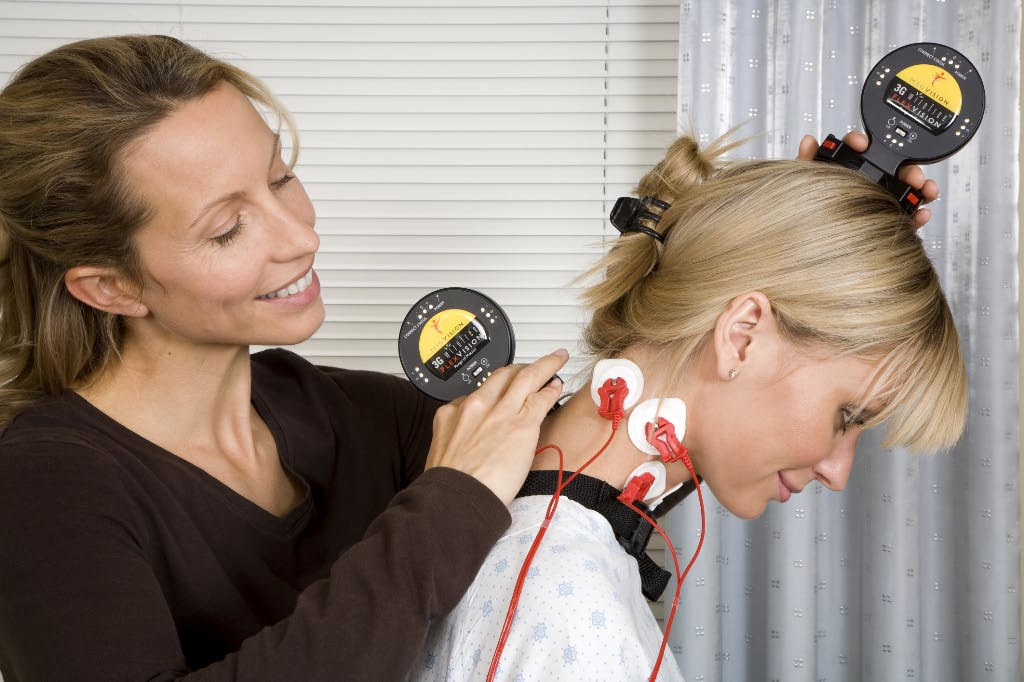
When a patient walks into your practice after a car accident, their neck might feel stiff, their movements limited. Over time, their range of motion may improve—sometimes even returning to pre-injury levels. But what about the pain that lingers? That subtle tension they can’t shake? This is where muscle guarding comes in, an often-overlooked finding that, when it persists after treatment, the AMA Guides recognize in rating the spine. At Clear DMX, our DynaROM (range of motion with surface EMG) test shines a spotlight on this critical factor, delivering hard data that can transform personal injury claims and patient care.
Muscle Guarding: The Hidden Culprit
Muscle guarding is the body’s protective response to injury—a tightening of muscles around a damaged area to prevent further harm. In soft tissue injuries like whiplash, it shows up as stiffness or resistance during movement, even if the patient doesn’t consciously notice it. While range of motion might normalize with treatment, muscle guarding can persist, locking in pain and dysfunction long after the accident. This isn’t just discomfort—it’s a measurable finding, and DynaROM is built to record it.
DynaROM and the AMA Guidelines
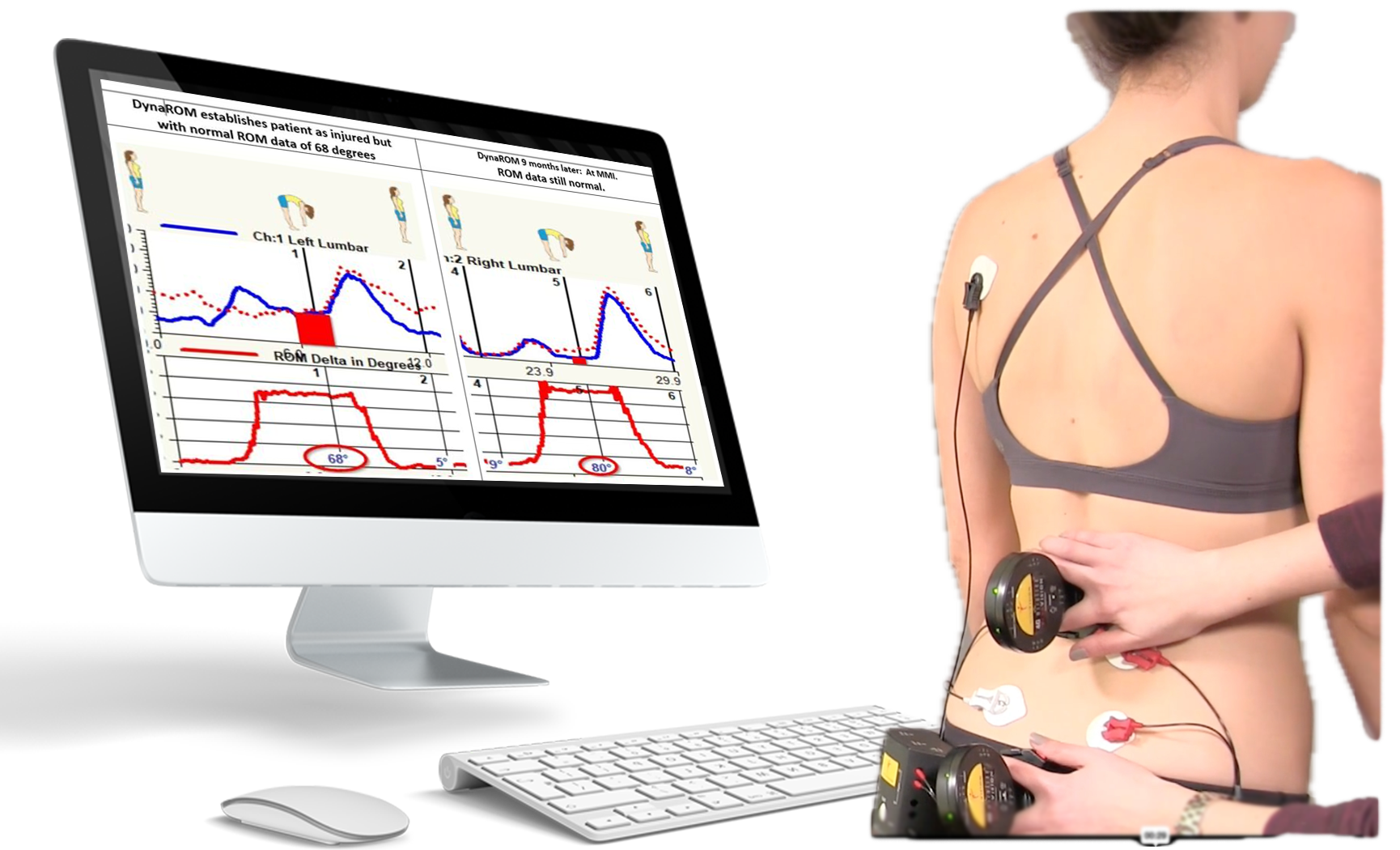
The AMA Guides to the Evaluation of Permanent Impairment (4th and 5th Editions) list muscle guarding among the findings for DRE Cervical Category II (5% in the 4th Edition; 5–8% in the 5th), assessed at maximum medical improvement. DynaROM takes this a step further by quantifying it with precision. Unlike static range of motion tests, DynaROM measures how muscles behave during active movement—tracking resistance, guarding, and limitations in real time. It produces objective graphs of motion and muscle activity that document guarding as the AMA Guides define it. For a patient whose range of motion looks “normal” on paper but whose muscle guarding tells a different story, this test bridges the gap between perception and reality.
When Range of Motion Isn’t Enough
Here’s the catch: a patient might regain full range of motion, bending and turning their neck like they did before the injury. But if muscle guarding remains, that recovery is incomplete. Laboratory studies show that simulated whiplash increases neck-ligament laxity and reduces ligament strength (Ivancic 2008; Tominaga 2006), and muscles may continue to guard the injured area. This isn’t just a minor annoyance; it’s a daily burden that can limit work, sleep, and quality of life. DynaROM documents it, showing that “back to normal” isn’t always the full picture.
Boosting Personal Injury Claims
For personal injury attorneys, DynaROM is a game-changer. Insurance companies often downplay claims when range of motion appears restored, arguing the injury isn’t severe or permanent. But when DynaROM data shows persistent muscle guarding—backed by AMA-aligned metrics—it’s a different story. This objective evidence helps the case by:
-
Demonstrating Permanence: Guarding that persists at maximum medical improvement supports the treating doctor’s opinion that the injury is lasting.
-
Quantifying Pain: The test ties physical findings to the patient’s lived experience, giving their complaints an objective basis.
-
Countering Skepticism: Measured findings answer the argument that the complaints are only “subjective.”
A DynaROM report from ClearDMX gives attorneys and doctors an objective record of an injury that hasn’t fully healed. When guarding persists at maximum medical improvement, our Long-Term Care Report turns that finding into research-sourced recommendations for future care, priced for the patient’s home ZIP code. Every case is different, and no test can promise a result.
Why DynaROM Matters for Soft Tissue Injuries
Soft tissue injuries are tricky. They don’t always show up on X-rays or MRIs, and their long-term effects—like muscle guarding—can fly under the radar without the right tools. DynaROM fills this gap by focusing on function, not just structure. It’s especially vital for whiplash cases, where rapid neck motion can tear muscles and ligaments in ways that heal unevenly. Add in factors like delayed symptoms or pre-existing wear, and the need for precise, dynamic testing becomes clear. With DynaROM, we can pinpoint the injury’s true impact, while attorneys gain a compelling narrative for their clients’ struggles.
Clear DMX: Your DynaROM Advantage
At Clear DMX, we make DynaROM accessible without burdening your practice. Refer your patients to us, and we’ll handle the testing, delivering detailed reports that follow the AMA Guides’ definitions, written for everyone—patients, adjusters, and attorneys. Our process explains the test, its purpose, and the results in plain language, ensuring no one misses the significance of muscle guarding. Paired with our DMX testing for structural damage, it’s a one-two punch for uncovering the full scope of soft tissue injuries.
Take Action Today
Persistent muscle guarding is objective evidence that the injury has not fully resolved. With DynaROM, you can give your patients an accurate diagnosis and your attorney partners measured findings they can put in front of an adjuster. Call Dr. Schmitt at 443-775-7550 to start referring patients for DynaROM testing.








3 Responses
The writing creates a sacred space for reflection. It doesn’t rush to provide answers but allows the questions themselves to breathe, becoming part of the reader’s inner dialogue.
Definitely one of the best explanations out there.
Whats up! I simply want to give an enormous thumbs up for the great data you have here on this post. I might be coming again to your blog for more soon.