What DMX measures
Digital Motion X-ray (DMX) is a low-dose, pulsed form of videofluoroscopy, an X-ray video of the neck moving. Each level is measured: how far one vertebra slips or tilts on the one below. Those measurements are compared with published normal limits, such as no more than 2 mm of slipping at either end of motion (Knopp 2001; Centeno 2007). Motion beyond the limits after a whiplash injury is reasonably read as a sign of ligament injury (Freeman 2020). In a 2020 study, two or more abnormal findings identified symptomatic whiplash patients with 93% sensitivity and 79% specificity.What DynaROM measures
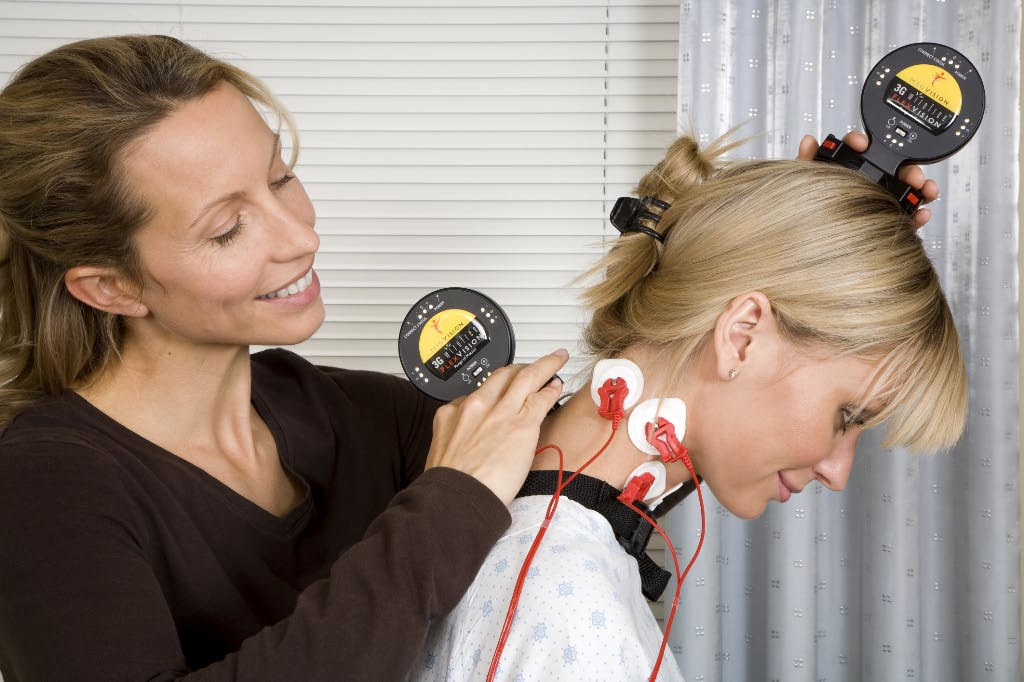
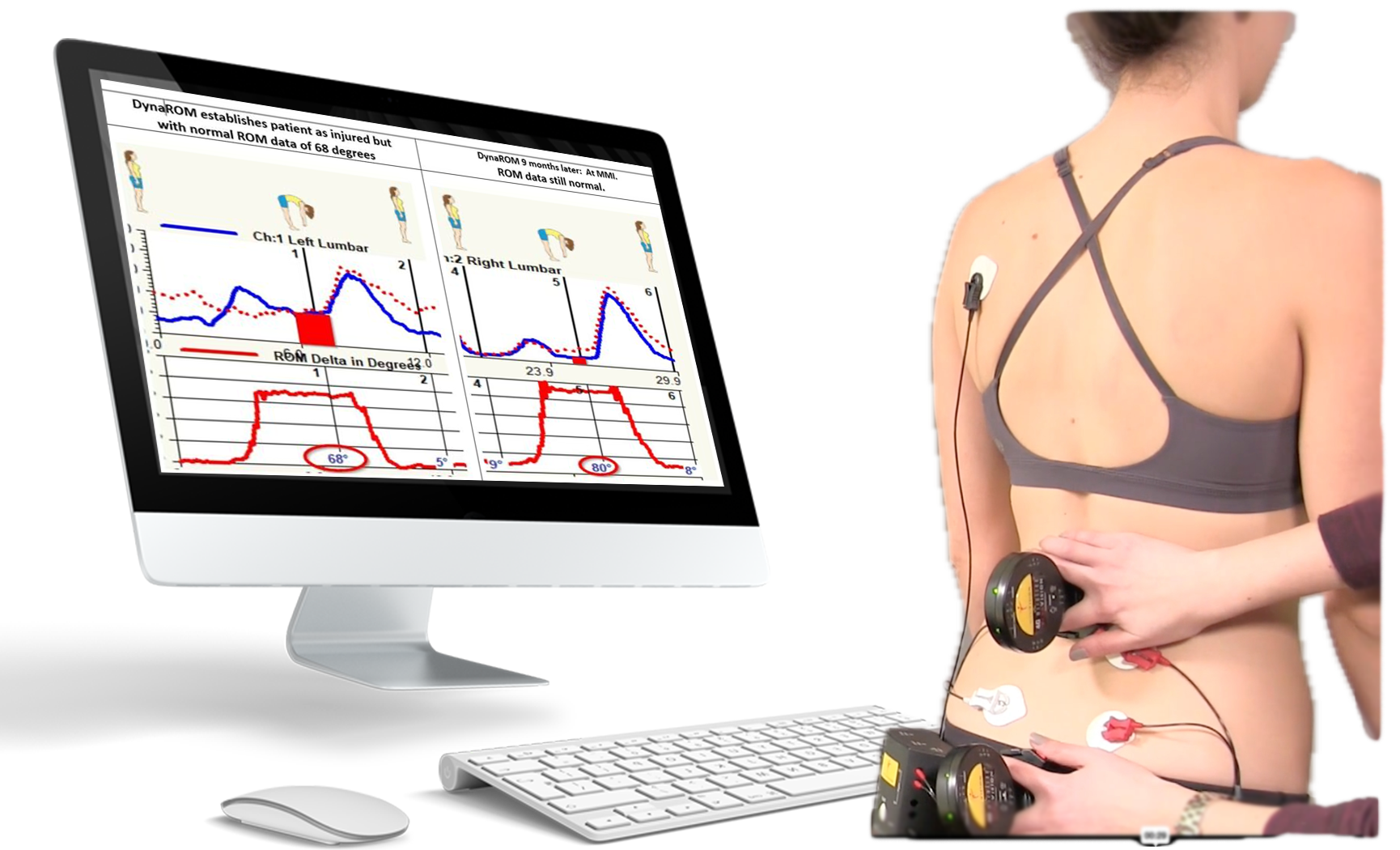
DynaROM records range of motion together with surface EMG, documenting muscle guarding, the protective tightening of muscles around an injury. The AMA Guides (4th and 5th Editions) recognize muscle guarding at maximum medical improvement as a finding for DRE Cervical Category II.Why lasting findings matter
Ligaments heal with scar tissue that is weaker than the original (Frank 2004), and simulated whiplash reduces ligament strength by about 20% (Tominaga 2006). About half of people with whiplash still report neck pain a year later (Carroll 2008). When abnormal motion is still present after care is complete, it is expected to last, and the treating doctor can rely on it when giving a prognosis.What the attorney gets
A plain-English report with marked images an adjuster, judge or jury can see for themselves, every measurement shown against its limit, and the significance explained without overstatement. Where a level is abnormal, our reports cite the AMA Guides’ motion criteria (3.5 mm, or more than 11 degrees greater than at either adjacent level, on plain flexion-extension X-rays) to show how significant it is, not as an impairment rating. Accurate reports are harder to attack, and that is the point.
At maximum medical improvement, our Long-Term Care Report adds what the future-care claim needs: research-sourced recommendations for ongoing care tied to the lasting findings, priced with published regional fee data for the client’s home ZIP code, plus an updated permanent diagnosis and prognosis for the treating doctor.
A claim built on complaints alone asks the adjuster to decide whether to believe the patient. A claim built on objective, measured findings asks them to evaluate the injury. Every case is different, and no test can promise a result, but that difference in the file is real.
Call Dr. Schmitt at 443-775-7550 to discuss a case. Sources: Freeman MD et al., Int J Environ Res Public Health 2020;17(5):1693. Knopp R et al., Ann Emerg Med 2001;38(1):31-35. Centeno CJ et al., Pain Physician 2007;10(5):667-672. Tominaga Y et al., BMC Musculoskelet Disord 2006;7:103. Frank CB, J Musculoskelet Neuronal Interact 2004;4(2):199-201. Carroll LJ et al., Spine 2008;33(4S):S83-S92. AMA Guides to the Evaluation of Permanent Impairment, 4th and 5th Editions.